It’s uncertain where the name "Little Venice" came from and even though you’re unlikely to see any gondolas, it’s a title that well suits this area with its attractive waterways.
For most of the year Little Venice is one of the most charming and tranquil corners in London but on the first bank holiday weekend in May (Saturday 4th - Monday 6th May 2013) the area is transformed with the vibrant and colourful Canalway Cavalcade, a unique waterways festival. It is organised by the IWA (Inland Waterways Association). More information about the IWA can be found on their website here.

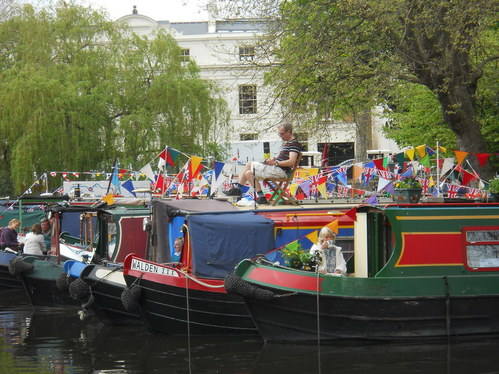
About 150 beautifully decorated boats attend this three day festival and one of the highlights is the procession of illuminated boats on the Sunday evening. There’s a wide range of events from music to morris dancing, children’s activities as well as a wide range of stalls along the towpath selling food, drink and crafts.
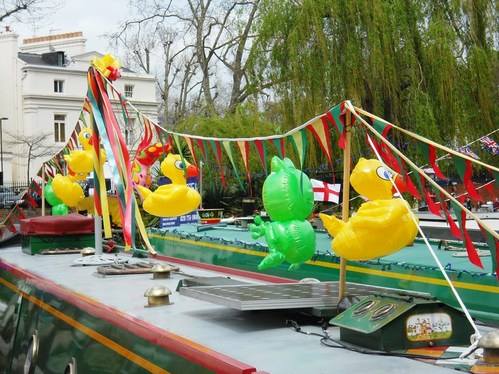
The owners have ensured that their boats are beautifully maintained and decorated, painted in bright colours and many have added humourist touches.
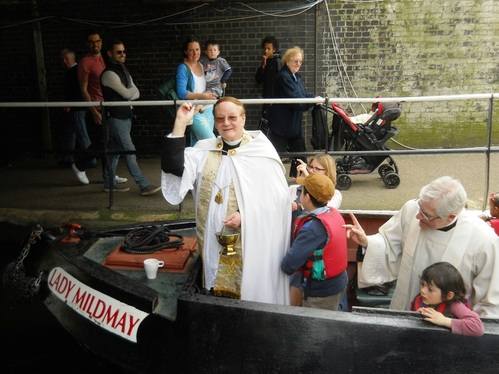
One of the events being held on the Sunday afternoon, when we visited, was the Blessing of the Boats.
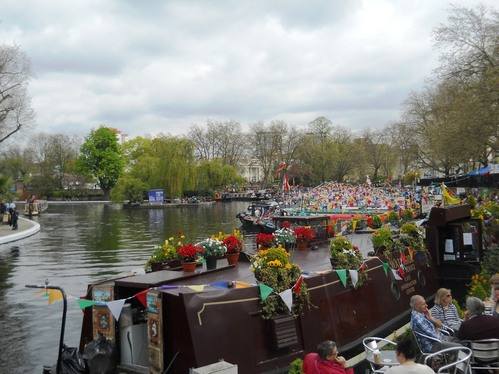
A view of Browning's Pool
Browning’s Pool, named after Robert Browning, the poet and former resident, is where the Grand Union Canal and the Regent’s Canal meet. The Regent’s Canal, named after the Prince Regent, the future George IV, was completed in 1820.
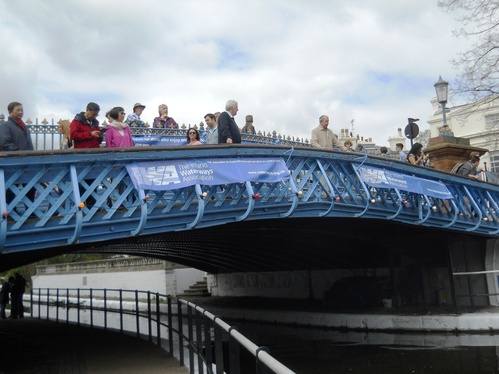
Horse Bridge
Although Little Venice looks idyllic today the canals were first built for industrial purposes to transport bulky and non perishable good, such as coal and timber. The towpaths alongside the canals were originally where the horses walked pulling the boats. A horse pulling a canal boat could carry a much heavily load than a horse pulling a cart. The boat men with their wives and children all lived and worked together in very cramp conditions on the boats. Nowadays the area focusing on leisure and there are pleasure boats, cafes and a puppet theatre.
A glimpse of the elegant houses that line the canal
Most of the area’s elegant white stucco villas date from the 1840s. They were built in an Italianate style and many are ornately decorated with their own unique features.
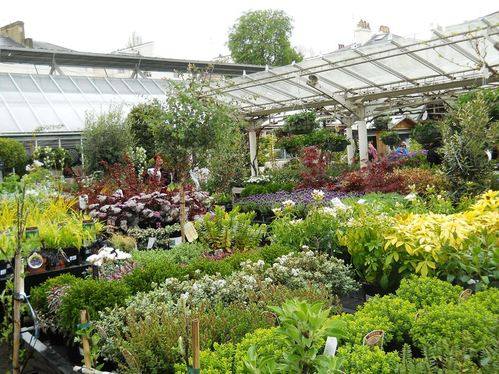
Clifton Nurseries - A Hidden Oasis
One of the delights of this area is visiting Clifton Nurseries. The garden centre is tucked away in a residential street almost hidden between two houses.

Carrot Cake and Lemonade - both home made
The cafe, located in the conservatory, serves delicious home made cakes and provided a quiet retreat from the hussle and bussle of the festival. More information about Clifton Nurseries can be found on their website here.
The author of this blog is a qualified City of London and City of Westminster Tour Guide who leads guided walks combining world famous landmarks with hidden treasures often missed by the crowds.


